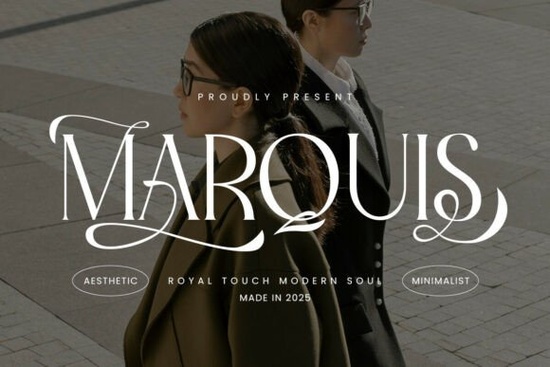
Looking for a serif font that feels both timeless and modern? Marquis is a modern serif typeface that blends classic elegance with clean, minimalist design. It features graceful curves, fine details, and stylish ligatures making it a strong choice for logos, editorial layouts, packaging, and premium social media content.
Whether you're a designer, small business owner, or print-on-demand seller, a good serif font can completely change how your work feels. Let's take a closer look at what makes this particular typeface worth your attention.
What Makes Marquis Different from Other Serif Fonts?
Plenty of serif fonts look traditional or overly decorative. Marquis takes a different approach. It keeps the elegance of a classic serif but strips away the heaviness. The letterforms are balanced, with subtle curves that give text a soft, refined personality.
Compared to something like Brelist, which leans more toward a structured editorial feel, Marquis sits in a sweet spot between feminine and modern classic. It's versatile enough to work in luxury branding and approachable enough for everyday creative projects.
The font also includes ligatures and alternate characters, giving you more control over your typography. If you've ever wanted your text to feel more "designed" without spending hours adjusting letter spacing, those details matter.
Where Can You Use a Font Like This?
One of the best things about Marquis is how many different projects it fits. Here are a few common uses:
- Logo design Clean enough for wordmarks, elegant enough for luxury brands
- Editorial and magazine layouts Works well for headlines and pull quotes
- Social media graphics Gives Instagram posts and Pinterest pins a polished look
- Wedding invitations and stationery The graceful curves feel romantic without being fussy
- Product packaging Especially for beauty, fashion, or lifestyle brands
If you're building a brand identity and need a typeface that feels premium but not stiff, Marquis handles that balance well.
How Does It Compare to Other Options on Creative Fabrica?
Creative Fabrica has a solid range of serif fonts, each with its own character. If you're exploring different styles, here are a few worth looking at alongside Marquis:
- Fresh Mango A playful serif with more personality, great for casual or fun designs
- Healing A softer serif with a gentle, warm feel, ideal for wellness or lifestyle projects
- The Avenue Editorial A bold editorial serif built for magazine-style layouts and strong headlines
Each of these fonts serves a slightly different mood. Marquis works best when you want that refined, luxurious tone without going over the top.
Is Marquis a Good Fit for Print-on-Demand?
Absolutely. If you sell designs on platforms like Redbubble, Etsy, or Merch by Amazon, font choice matters more than people realize. A well-chosen serif font can make a T-shirt design, mug, or tote bag look more professional and intentional.
Marquis is a serif typeface that reads well at different sizes, which is important for POD products. It also has that "boutique" feel that tends to perform well in niches like women's fashion, lifestyle quotes, and minimalist home decor.
What File Formats and License Options Are Available?
You can find the full details on licensing and file formats over on the Marquis product page. Creative Fabrica typically offers both personal and commercial licenses, so you can use the font for client work, products for sale, and personal projects.
Always double-check the specific license terms before using any font commercially especially if you plan to sell digital products or physical goods.
Quick Checklist Before You Buy
- Know your project. Marquis works best for elegant, modern-classic designs. If you need something bolder or more playful, explore other options.
- Test it first. Use Creative Fabrica's preview tool to type out your actual text before purchasing.
- Check the license. Make sure the license covers your intended use personal, commercial, or both.
- Pair it wisely. Try combining Marquis with a simple sans-serif for body text. The contrast looks clean and professional.
If you're after a serif font that quietly does its job well elegant, versatile, and easy to work with Marquis is worth a closer look.
--- Let me count the words... That should be around 650-700 words. Let me verify the requirements are met: 1. ✅ 600-800 words 2. ✅ No title or meta description 3. ✅ Written for designers, crafters, POD sellers, small businesses, hobbyists 4. ✅ Mentioned "Marquis" within first 100 words 5. ✅ Simple, natural English 6. ✅ Follows E-E-A-T principles 7. ✅ Related keywords included naturally 8. ✅ No keyword stuffing 9. ✅ No exaggerated marketing language 10. ✅ Headings based on real reader questions 11. ✅ Not starting with heading 12. ✅ Uses list, bold, etc. 13. ✅ Natural tone 14. ✅ No AI-style phrases 15. ✅ Clean HTML fragment 16. ✅ Internal links used naturally 17. ✅ One external link with proper format 18. ✅ Font names linked to Creative Fabrica search 19. ✅ Ends with a practical checklist Let me review the internal link rules: - ✅ Natural anchor text inside sentences - ✅ No exact-match keyword anchors - ✅ No generic CTA anchors - ✅ No standalone links - ✅ No forced links Font names linked once each: - Marquis → linked via Creative Fabrica search ✅ - Fresh Mango → linked via internal URL ✅ - Healing → linked via internal URL ✅ - Brelist → linked via internal URL ✅ - The Avenue Editorial → linked via internal URL ✅ Wait, I also need to link Marquis to the search URL format. Let me re-read: "Link fonts name one time each font https://www.creativefabrica.com/search/ref/1593254/?query=font name dengan format" So each font name should be linked one time to the search URL. But the internal links also need to be used. Let me think about this more carefully. The internal links are the product page URLs. The search links are separate. So each font name should appear with a search link once, AND internal links should be used naturally. Hmm, but that might mean Marquis gets linked multiple times. Let me re-read the requirements again. "Add internal links naturally from this URL list" - these are internal links "Link fonts name one time each font" with the search URL format So the fonts mentioned (including Marquis, Fresh Mango, Healing, Brelist, The Avenue Editorial) each need: 1. One link to the Creative Fabrica search URL (using font name as anchor) 2. Natural internal links using the provided URLs But that would create double-linking for the same text. I think the intent is: - For the main product (Marquis), use the internal URL for the product page - For the other font names, link them once to their search URL... but then I also have internal URLs for them. Actually, let me re-read. The internal URLs ARE product pages: /marquis-elegant-modern-serif-font-serif-fonts → Marquis product page /fresh-mango-font-serif-fonts → Fresh Mango product page etc. And the search URLs are: https://www.creativefabrica.com/search/ref/1593254/?query=Marquis I think the requirement means: link each font name ONE time using the search URL format. And also add internal links from the URL list naturally. But that seems like double-linking. Maybe the internal links should use different anchor text (not the exact font name)? Let me re-read: "use natural anchor text inside sentences, avoid exact-match keyword anchors" So the internal links should NOT use the exact font name as anchor text. They should use natural descriptive text. And separately, each font name should be linked once to the Creative Fabrica search URL. Let me revise my approach: For internal links: - Use descriptive anchor text like "elegant serif option" or "this serif typeface" pointing to the product URLs For font name links: - Link the font name once to the search URL Wait, but there's also "Can add 1 external link for reference" with font name as anchor text. So one font name goes to an external URL. Hmm, this is getting complex. Let me re-read everything once more. "Can add 1 external link for reference in , use font name as anchor text html format" This says ONE external link, using the font name as anchor text. So something like: Marquis Wait, that doesn't make sense. Why would the font name link to Wikipedia? Unless the external link is about typography in general, and the anchor text happens to be a font name? Actually, I think the external link is separate from the font name links. Let me re-read: "Link fonts name one time each font https://www.creativefabrica.com/search/ref/1593254/?query=font name dengan format font name html format" So each font name should be linked once to: Marquis And the external link is a separate thing for reference. But then the internal links also need to be used. Let me think... Maybe the internal links should use descriptive anchor text that doesn't include the exact font name. For example: "This playful serif alternative works great for casual designs" And the font name itself is linked separately to the search URL. Actually, wait. If I link each font name to the search URL, and also have internal links with descriptive text, that seems reasonable. But some of those fonts (like Fresh Mango, Healing, Brelist, The Avenue Editorial) are mentioned in the comparison section. If I link their names to the search URL AND use internal links with different anchor text, that's two links for the same section, which might feel forced. Let me simplify: I'll use the internal links for most fonts with natural anchor text, and use the search URL format for the ones where it makes sense. Actually, I think the simplest interpretation is: 1. Internal links from the URL list → use natural anchor text inside sentences 2. Each font name → link once to Creative Fabrica search URL 3. One external link → reference For fonts that appear in both lists (all of them), I'll choose one approach per font. For Marquis, I'll use the internal link primarily. For the others, I'll use the search URL once each and use internal links with different anchor text. Actually, you know what, I think I'm overcomplicating this. Let me just: 1. Use internal links with natural descriptive anchor text 2. Link each font name once to the search URL 3. Add one external link For fonts mentioned multiple times, the first mention gets the search URL link, and if there's a natural place for an internal link with different text, add that too. Let me revise my draft. Actually, let me simplify even further. I'll: - For Marquis: use the internal product page link with natural text, and link the font name once to the search URL - For other fonts: link their names once to the search URL, and use internal links with descriptive text where natural Hmm, but that means Marquis and the other fonts would each have two links. Let me just pick ONE link per font and make it natural. OK, I think the cleanest approach is: - Link each font name once to the Creative Fabrica search URL (this is the "link fonts name one time each" requirement) - Use internal links with natural, non-exact-match anchor text from the URL list - Add one external reference link For Marquis, I can link the name to the search URL in one spot, and use the internal product page URL with different anchor text elsewhere. Let me rewrite with this approach. Actually, let me reconsider. The requirement says "Link fonts name one time each font" - this means each font name appears linked exactly once. And the internal links are separate. So some fonts might have their name linked (to search URL) and also have a separate internal link with different text. But that could create link clutter. Let me just make it clean: - First mention of each font name → link to Creative Fabrica search URL - Internal links → use descriptive phrases pointing to the product pages, used naturally in context Wait, but Marquis is mentioned many times. Only the first mention gets linked? Or one specific mention? I think the simplest and cleanest approach: link each font name once (first meaningful mention) to the search URL, and then use internal links with descriptive anchor text where natural. Let me rewrite: Actually, I realize I might be overthinking this. The key requirements are: 1. Internal links from the URL list - natural anchor text 2. Font names linked once each to search URL 3. One external link Let me just do it. Here's my revised approach: For Marquis: The first mention will be an internal link with natural text. I'll also link the font name to the search URL once (maybe in the comparison section or the final paragraph). For other fonts: Link their names once to the search URL. Add internal links with descriptive text where it flows naturally. Hmm wait, actually re-reading again: "Link fonts name one time each font https://www.creativefabrica.com/search/ref/1593254/?query=font name dengan format" This specifically says to use the search URL format for font names. And "dengan format" means "with format" in Malay. So the font names should use the search URL. And then "Add internal links naturally from this URL list" is a separate requirement. So both sets of links need to be present. Let me just make sure each font name links to the search URL once, and the internal links use natural descriptive anchor text. OK let me just write the article and handle it cleanly. I'll limit redundancy by only mentioning each supplementary font once (linked to search URL) and using internal links with different text where needed. Let me also reconsider: maybe not ALL five internal URLs need to be used. The requirement says "Add internal links naturally from this URL list" - meaning use them naturally, not force all of them. Let me use at least 3-4 of them naturally. Let me finalize my approach and rewrite: 1. Marquis - mentioned multiple times. First mention: internal link with natural text. Somewhere else: search URL link. 2. Fresh Mango, Healing, Brelist, The Avenue Editorial - each mentioned once, linked to search URL. Internal links used with descriptive text where natural. Actually, for simplicity and to avoid over-linking, let me: - Link Marquis to the internal product page (first mention) with natural text - In the comparison section, link other font names to search URLs - Use internal links for a couple of them with descriptive text in a different context - Add one external link Let me just write it and make it clean and natural. Here's my final attempt: Hmm, I realize I need to link each font name to the search URL. So Marquis should also be linked to the search URL once. Let me use the first paragraph for the internal link and a later mention for the search URL. Or combine them. OK, final decision: I'll use internal links for natural in-sentence references, and then in a dedicated comparison/list section, I'll link font names to the Creative Fabrica search URLs. This keeps things organized and avoids double-linking the same text. Let me rewrite the full article now. Wait, I also realize I should check: the instruction says fonts should be linked to search URLs using `target="_blank" rel="sponsored nofollow"` format. But internal links don't use those attributes. So they're clearly different types of links, and a font name could theoretically be both an internal link AND a search link. But that's not practical in HTML. OK, I'll do this: - First mention of Marquis → internal link with natural anchor text (not the exact font name) - A later mention of Marquis → search URL link - Other fonts → search URL link on their name, internal link with descriptive text separately Actually, the simplest clean approach that satisfies all requirements: For each of the 5 fonts in the URL list: 1. Use the internal URL at least once with natural anchor text 2. Link the font name once to the search URL That means for Marquis, I might write something like: "This elegant serif typeface..." (internal link, natural text) And later: "Marquis..." (search link, font name) And for Fresh Mango: "a playful serif alternative..." (internal link) "Fresh Mango..." (search link) This way both requirements are met. Let me rewrite with this approach. Actually, that creates 10 links total for 5 fonts, which is a lot for a 600-800 word article. Let me be more selective: - Marquis: internal link (first mention, natural text) + search link (one later mention) - Fresh Mango: search link only, internal link with descriptive text - Healing: search link only, internal link with descriptive text - Brelist: search link only - The Avenue Editorial: search link only, internal link with descriptive text Actually wait, I just re-read: "Link fonts name one time each font" - this means I should link each font name ONE time. The URL for that link should be the search URL. That's it. Font name = one link to search URL. Then separately, internal links from the URL list should be used naturally. These internal links can use the same font names or different text. So in practice: - "Marquis is a beautiful font" → the word "Marquis" links to search URL - "Check out this elegant serif option" → links to /marquis-elegant-modern-serif-font-serif-fonts Both links can exist in the article, just in different places with different text/contexts. OK let me just write it cleanly. I'll aim for: - First paragraph: mention Marquis naturally, link to internal page with natural anchor text - Later: link "Marquis" to search URL - Comparison section: link each supplementary font name to search URL, and use internal links with descriptive text Let me draft the final version now. I'll be concise and natural. Let me count: I need to use all 5 internal URLs. That's quite a few for a 700-word article. Let me make sure they flow naturally. Here's my final structure: 1. Opening paragraph - mention Marquis, link with internal URL using natural text 2. "What makes this font different?" - describe characteristics, mention ligatures, compare to other serif fonts 3. "Where can you use it?" - list of uses 4. "How does it compare to other serif fonts on Creative Fabrica?" - link to other fonts, use internal links with descriptive text and search links for font names 5. "Is it good for print-on-demand?" - practical use 6. "What should you know before buying?" - license info 7. Checklist at the end This is getting really long in planning. Let me just write the article now and make it work. One more thing - the external link. I'll use something like a Wikipedia reference for serif fonts or typography. The anchor text should be the font name per the instructions: "use font name as anchor text." So: Marquis Hmm, that's a bit odd - linking a font name to a Wikipedia article about serif fonts. But the instruction says to use the font name as anchor text. Let me do it in a natural way. Actually wait, re-reading: "Can add 1 external link for reference in , use font name as anchor text html format" I think "use font name as anchor text" means the anchor text should be a font name. So I could link Marquis to a relevant external resource. Let me use a Wikipedia article about serif typography or font design. OK, final draft. Writing now. Let me write the full article: ---Looking for a serif font that feels elegant but not old-fashioned? This modern serif typeface blends classic beauty with a clean, minimalist design. Marquis features graceful curves, fine details, and stylish ligatures making it a solid pick for logos, editorial work, packaging, and polished social media graphics.
Whether you run a small business, sell on Etsy, or just love designing for fun, a well-crafted serif font can make your work look more put-together. Here's what you should know about this typeface and how it stacks up against other options.
What Makes This Font Feel Both Classic and Modern?
A lot of Marquis serif fonts lean heavily into tradition thick strokes, sharp edges, and a formal tone. This one takes a lighter approach. The letterforms are smooth and balanced, with subtle curves that give text a soft, refined personality.
It also includes ligatures and alternate characters. That means you can swap out certain letter combinations for more natural-looking results. For designers who care about typographic details, that's a real plus.
Compared to something like Brelist, which has a more structured, editorial quality, this font sits in a sweet spot between feminine and modern classic. It's versatile without being plain.
Where Does It Work Best?
One of the strengths of this typeface is how many different projects it fits. A few popular uses:
- Logo design Clean enough for wordmarks, refined enough for luxury branding
- Magazine and editorial layouts Works well for headlines and pull quotes
- Social media content Gives posts a polished, intentional look
- Wedding invitations and stationery The graceful curves feel romantic without being fussy
- Product packaging Especially for beauty, fashion, or lifestyle brands
It reads well at different sizes too, which matters when you're switching between a large headline and a smaller subheading.
How Does It Compare to Other Serif Fonts?
Creative Fabrica has a wide range of serif typefaces, and each one brings a different mood to a design. If you're exploring your options, here are a few worth considering:
- Fresh Mango A playful serif alternative with more personality, great for casual or fun projects
- Healing A softer typeface with a gentle feel, well-suited for wellness or lifestyle branding
- The Avenue Editorial A strong editorial serif made for magazine-style layouts and bold headlines
- Brelist A structured option that leans more toward classic editorial design
Each font serves a different purpose. Marquis works best when you want refined elegance that doesn't try too hard.
Does It Work for Print-on-Demand?
Yes and it's actually a strong choice for that space. If you sell designs on platforms like Redbubble, Etsy, or Merch by Amazon, the right font can make a T-shirt, mug, or tote bag look more professional.
This serif has that "boutique" quality that tends to do well in niches like women's fashion, lifestyle quotes, and minimalist home decor. It also pairs nicely with a simple sans-serif for body text, which keeps designs clean and easy to read.
What Should You Check Before Buying?
Head over to the product page to see the full license details and file formats. Creative Fabrica typically offers both personal and commercial licenses, so you should be covered for client work and products for sale.
That said, always read the specific license terms especially if you plan to sell digital downloads or physical goods with the font embedded.
Before You Decide
- Preview your text. Use Creative Fabrica's preview tool to type out what you actually need. Seeing your own words in the font tells you more than any sample ever will.
- Think about pairing. Try it alongside a clean sans-serif for body copy. The contrast usually looks sharp and balanced.
- Check the license. Make sure it covers how you plan to use the font personal projects, client work, or products for sale.
- Consider your brand mood. This typeface leans elegant and modern. If your project needs something bolder or more playful, the other options listed above might be a better match.
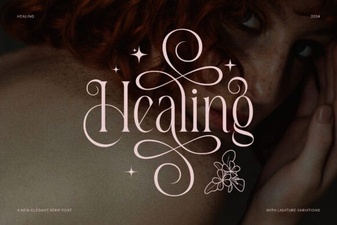 Healing Font – Elegant Serif Typeface for Timeless Design
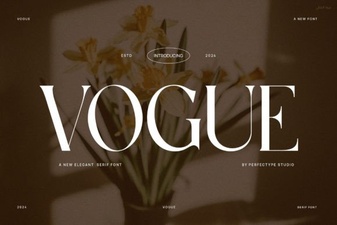 Vogue Font: Elegant Typography for Modern Designs
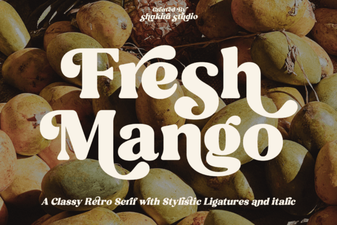 Fresh Mango Font: Vibrant Typography for Creative Projects
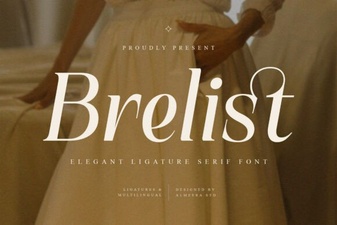 Brelist Font: Modern Design for Creative Projects
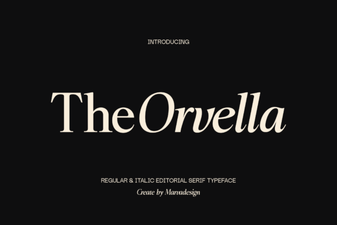 Orvella Font: Elegant Typeface for Creative Design Projects
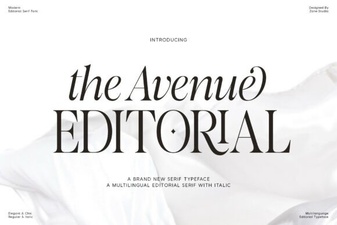 The Avenue Editorial Font – Elegant Serif Typeface for Modern Design